
Slurry Desander: Working Principle, Structure, Process and Key Advantages
In foundation drilling, bored pile construction, diaphragm wall projects, tunneling, and other geotechnical engineering applications, an efficient slurry treatment system plays an important role in maintaining drilling performance, protecting equipment, reducing slurry consumption, and improving overall construction efficiency.
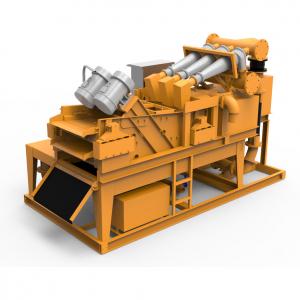
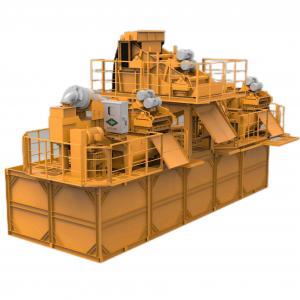
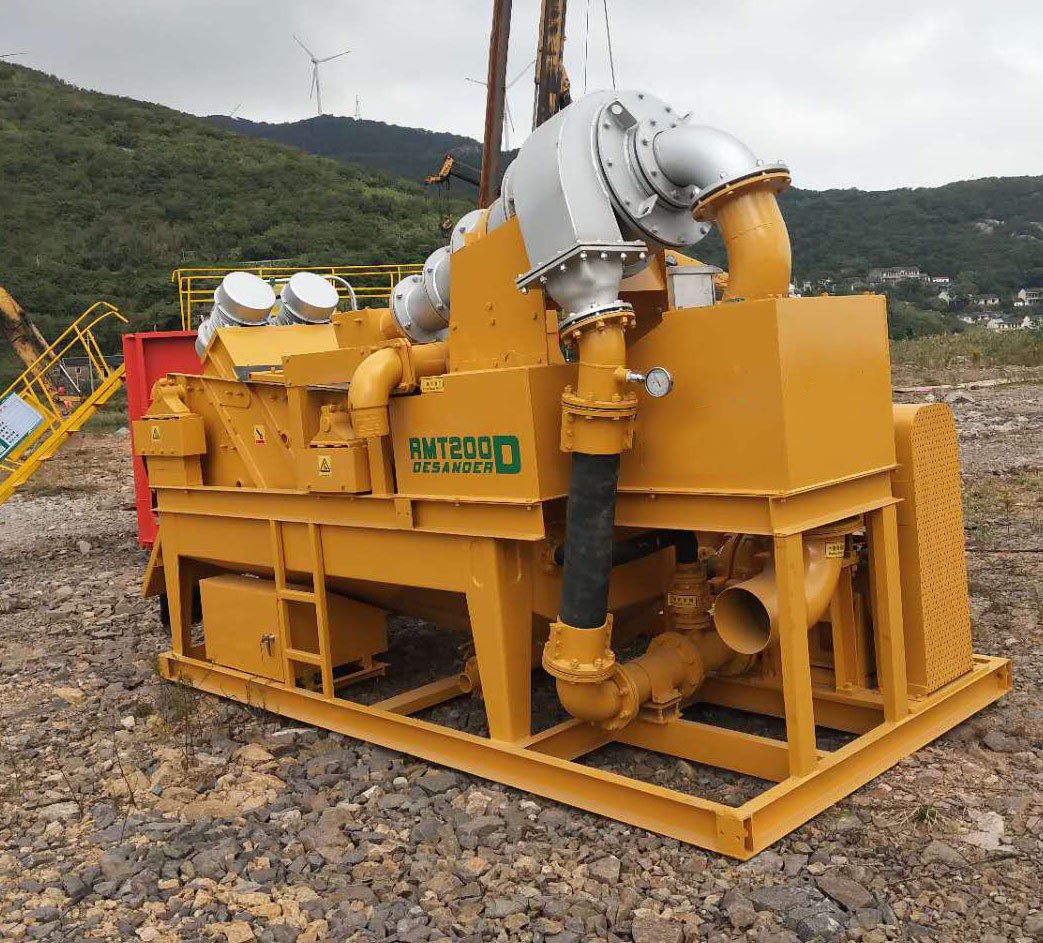
A Slurry Desander is one of the key components of a modern Slurry Treatment System. It is mainly used to remove sand, rock particles, and other coarse solid particles from drilling slurry. By efficiently separating unwanted solids from reusable slurry, a slurry desander helps maintain slurry quality, reduce equipment wear, and improve the stability of the drilling process.
For contractors working on bored piles, deep foundations, diaphragm walls, and tunneling projects, understanding how a slurry desander works is important for selecting and operating the right slurry treatment equipment.
This article explains the working principle, structure, operating process, advantages, and applications of slurry desanders, helping contractors and engineers better understand slurry separation and recycling technology.
1. What Is a Slurry Desander?
A Slurry Desander is a slurry separation machine designed to remove sand and coarse solid particles from drilling slurry.
It is commonly used as a secondary separation unit in a complete Slurry Treatment System. In a typical foundation drilling application, drilling slurry first passes through a vibrating screen or coarse separation unit before entering the desander.
The slurry desander normally uses hydrocyclone separation technology. Instead of relying on complex mechanical moving parts for the primary separation process, the hydrocyclone uses slurry pressure and centrifugal force to separate solid particles according to their density and particle size.
The main purpose of a slurry desander is to remove unwanted sand and solid particles while recovering reusable slurry.
This is particularly important for:
· Bored pile construction
· Rotary drilling
· Deep foundation projects
· Diaphragm wall construction
· TBM and tunneling projects
· Underground construction
· Geotechnical engineering
A properly designed Slurry Treatment System can continuously recycle and clean drilling slurry, helping contractors reduce slurry consumption and improve construction efficiency.
2. Main Structure of a Slurry Desander
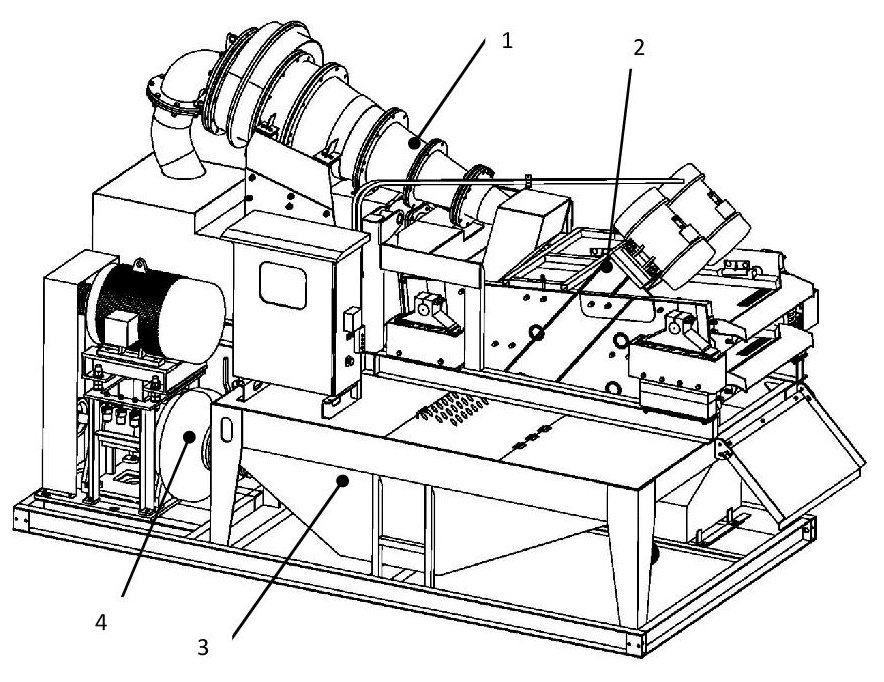
A complete slurry desander typically consists of several major components working together to achieve efficient solid-liquid separation.
2.1 Hydrocyclone Assembly
The hydrocyclone is the core separation component of the slurry desander.
It generally consists of a cylindrical upper section and a conical lower section. During operation, pressurized slurry enters the hydrocyclone tangentially and forms a high-speed swirling flow.
The centrifugal force generated inside the hydrocyclone separates heavier solid particles from the liquid phase.
Hydrocyclones are commonly manufactured from wear-resistant materials to withstand continuous exposure to abrasive drilling slurry.
Depending on the required processing capacity, a slurry desander can be equipped with one or multiple hydrocyclones.
2.2 Slurry Feed and Booster Pump
The slurry feed system normally includes:
· Slurry pump
· Feed pipe
· Pressure control components
· Valves and fittings
The slurry pump provides the required pressure for the hydrocyclone.
Stable feed pressure is important because insufficient pressure may reduce separation efficiency, while excessive pressure can increase wear on the hydrocyclone and other components.
2.3 Vibrating Dewatering Screen
The vibrating screen is installed below the hydrocyclone and is used for secondary solid-liquid separation.
The underflow discharged from the hydrocyclone usually contains separated sand together with a certain amount of slurry. The vibrating screen removes the remaining liquid from the discharged solids.
The recovered slurry can then return to the slurry circulation system, while the separated sand and solid waste are discharged from the system.
This process helps reduce slurry loss and improves the overall efficiency of the Slurry Recycling System.
2.4 Frame and Piping System
The supporting frame provides structural stability for the hydrocyclone, vibrating screen, pump, and other components.
The piping system normally includes:
· Slurry feed line
· Overflow line
· Underflow discharge line
· Slurry return line
· Solid discharge system
These components work together to create a continuous slurry treatment and recycling process.
3. How Does a Slurry Desander Work?
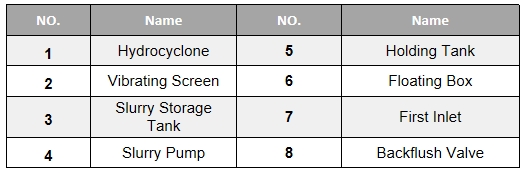
The working principle of a slurry desander is mainly based on hydrocyclone centrifugal separation.
The complete process can generally be divided into four stages:
Step 1: Pressurized Slurry Feeding
After preliminary separation by a vibrating screen, drilling slurry is pumped into the hydrocyclone under controlled pressure.
The slurry enters the cylindrical section tangentially.
This tangential entry creates a high-speed rotating flow inside the hydrocyclone.
Step 2: High-Speed Swirling and Centrifugal Separation
As the slurry rotates inside the hydrocyclone, centrifugal force separates the heavier solid particles from the liquid.
Sand, rock particles, and other high-density solids move toward the inner wall of the hydrocyclone.
Meanwhile, the lighter liquid and finer slurry particles move toward the central low-pressure zone.
This creates an internal separation between the heavier solids and the reusable slurry.
Step 3: Separate Overflow and Underflow
After separation, the materials follow two different flow paths.
The heavier sand and solid particles move downward along the conical wall and are discharged through the underflow outlet.
The cleaner slurry moves upward through the central vortex and exits through the overflow outlet.
The recovered slurry can then return to the slurry circulation tank or continue to the next stage of the Slurry Treatment System.
Step 4: Secondary Dewatering
The solid-rich underflow from the hydrocyclone is discharged onto the vibrating dewatering screen.
The screen separates residual slurry from the sand and solid particles.
The recovered liquid returns to the slurry circulation system, while the separated solids are discharged as waste.
This secondary dewatering process helps:
· Reduce slurry loss
· Improve solid discharge
· Increase slurry recovery
· Reduce waste disposal volume
· Improve overall slurry recycling efficiency
4. Key Advantages of a Slurry Desander
A properly designed Slurry Desander offers several important advantages for foundation and tunneling projects.
4.1 Efficient Sand Separation
Hydrocyclone technology provides efficient separation of sand and other coarse solid particles from drilling slurry.
This helps maintain the required slurry properties for drilling operations.
4.2 Reduced Equipment Wear
Excessive sand and abrasive particles in drilling slurry can accelerate wear on:
· Mud pumps
· Drilling tools
· Slurry pipelines
· Valves
· Mixing equipment
By removing abrasive solids, a slurry desander can help extend the service life of downstream equipment.
4.3 Continuous Slurry Treatment
A slurry desander can operate continuously as part of a complete Slurry Treatment System.
This makes it suitable for large-scale projects where large volumes of drilling slurry need to be processed continuously.
4.4 Reduced Slurry Consumption
By separating unwanted solids while recovering usable slurry, the system can reduce the amount of fresh slurry required during construction.
This can help reduce:
· Bentonite consumption
· Water consumption
· Waste slurry generation
· Transportation costs
· Disposal costs
4.5 Improved Slurry Recycling
A slurry desander is an important component of a Slurry Recycling System.
Cleaned slurry can be returned to the drilling process, helping maintain stable slurry circulation and improving overall construction efficiency.
4.6 Compact and Modular Design
Modern slurry desanders can be designed as compact and modular systems.
Multiple hydrocyclones can be configured according to required processing capacity, making the equipment suitable for different project sizes and working conditions.
5. Applications of Slurry Desander
Slurry desanders are widely used in modern foundation and underground construction projects.
Bored Pile Construction
Bored pile construction is one of the most important applications of slurry treatment equipment.
During rotary drilling, slurry is used to stabilize the borehole and transport drilled cuttings to the surface.
A slurry desander removes sand and solid particles from the returned slurry, allowing the treated slurry to be recycled.
This helps maintain slurry quality and supports stable borehole construction.
Deep Foundation Engineering
For large foundation projects, continuous slurry circulation and treatment are essential.
A Slurry Treatment System can process returned drilling slurry and remove unwanted solids before the slurry is reused.
This is particularly useful for:
· High-rise building foundations
· Bridge foundations
· Large-diameter bored piles
· Infrastructure projects
· Industrial foundations
Diaphragm Wall Construction
Slurry is widely used to stabilize trenches during diaphragm wall construction.
A slurry treatment system equipped with a desander can continuously remove sand and solid particles from the circulating slurry.
This helps maintain suitable slurry properties throughout trench excavation and concrete construction.
TBM and Tunneling
Slurry desanders can also be integrated into TBM slurry treatment systems and tunneling projects.
The system separates excavated solids from slurry and allows the liquid phase to be recycled.
This helps improve slurry circulation and reduce waste during underground construction.
Geotechnical Engineering
Slurry desanders are also suitable for various geotechnical and civil engineering applications where drilling slurry needs to be separated and recycled.
6. How to Improve Slurry Desander Performance
Correct operating conditions are essential for maintaining stable separation efficiency.
Maintain Stable Feed Pressure
The hydrocyclone requires an appropriate feed pressure to generate an effective swirling flow.
Too little pressure may reduce separation efficiency, while excessive pressure may increase wear.
Therefore, the slurry pump and pressure control system should be properly matched to the hydrocyclone configuration.
Check the Underflow Outlet Regularly
The underflow outlet should remain clear during operation.
Blockages can cause unstable separation, excessive slurry accumulation, and reduced processing efficiency.
Regular inspection and cleaning can help maintain stable operation.
Match the Equipment to Project Requirements
When selecting a slurry desander, contractors should consider:
· Required slurry flow rate
· Sand concentration
· Particle size
· Slurry density
· Bentonite concentration
· Project type
· Available installation space
Choosing the correct processing capacity is essential for building an efficient Slurry Treatment System.
7. Slurry Desander in a Complete Slurry Treatment System
A slurry desander normally does not work alone.
A complete Slurry Treatment System may include:
Drilling → Slurry Collection → Vibrating Screen → Slurry Desander → Fine Separation → Slurry Storage → Slurry Recycling
Depending on project requirements, the system can also include additional equipment such as:
· Vibrating screen
· Hydrocyclone
· Desilter
· Centrifuge
· Slurry pump
· Mixing tank
· Storage tank
· Automatic control system
The complete system can be configured according to the specific requirements of bored pile, diaphragm wall, TBM, and other foundation construction projects.
8. Why Choose a Professional Slurry Desander?
For contractors, selecting the right Slurry Desander Manufacturer is important for achieving reliable slurry treatment performance.
A professional manufacturer should provide:
· Appropriate processing capacity
· Wear-resistant hydrocyclones
· Reliable slurry pumps
· Efficient dewatering systems
· Modular equipment configuration
· Customized slurry treatment solutions
· Technical support
· Spare parts and after-sales service
The equipment should be selected according to actual project conditions rather than simply choosing the largest available processing capacity.
Conclusion
A Slurry Desander is a critical component of modern slurry treatment and recycling systems. By using hydrocyclone centrifugal separation technology, it efficiently removes sand, rock particles, and other unwanted solids from drilling slurry.
The basic process is:
Pressurized Feeding → High-Speed Swirling → Solid-Liquid Separation → Dewatering → Slurry Recycling
For bored pile construction, deep foundation engineering, diaphragm wall construction, TBM tunneling, and other geotechnical projects, an efficient Slurry Treatment System can improve slurry quality, reduce equipment wear, lower slurry consumption, and minimize waste disposal costs.
With the right equipment configuration and operating parameters, a slurry desander can become an important part of a more efficient, economical, and environmentally responsible foundation construction process.